Just before 2 am in March 2025, then-medical students Tass Sang, DO, and Andrew Ng, DO, sat in a tiny Japanese hotel room eating convenience store snacks and anxiously refreshing their email. Back home in California, their classmates waited together for the clock to strike 9 am on Match Day, the time when medical students across the nation would learn the location of their residency programs.
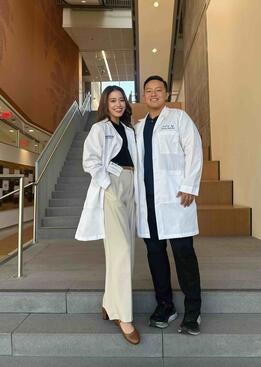
Family and friends each year witness students’ excited shouts and tears of disappointment as they find out where they’ll spend the next few years of their careers. “The idea of that was just so intimidating to me, so we decided, ‘Let's make it about us. Let's make it a moment where it doesn't matter where we match; we're going to celebrate no matter what,’” recalled Sang. The married couple decided to have their own Match Day ceremony in Japan. No matter the outcome, they would enjoy the day at Tokyo Disneyland.
Finally, a message appeared in their inboxes. “That was honestly one of my favorite memories, just being able to look up at Andrew, and we're sitting there in our bathrobes, and he's just got the biggest grin on his face because he read the email before I could,” Sang said. The pair had matched together at their first choice: UC Riverside School of Medicine.
The story begins
UCR marked Sang and Ng’s next chapter, but it was also the place that their story as a couple began during an undergraduate summer course in 2016.
“I met him in the haze of those couple of weeks where I was dying from the summer heat in Riverside and then from the amount of material that we had to learn in such a short period of time,” Sang recalled. The two received an introduction through a mutual acquaintance during their accelerated organic chemistry course and quickly became friends.
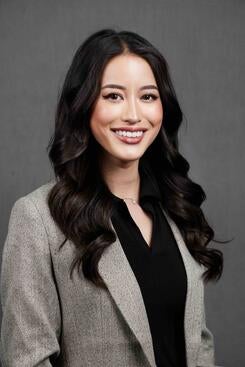
Neither one knew they’d just met their future spouse, medical school classmate, and physician colleague. At the time, heading into their second year of college, Ng wasn’t even sure whether he wanted to become a doctor or pursue another role in healthcare.
For Sang, though, the course was clear. Growing up as an undocumented immigrant, she and her mother relied on free clinics for healthcare. Sang volunteered in free clinics as a UCR undergraduate as a way to give back. “Through that I just fell into medicine, and realized that that was the best place for me to be in order to be able to help others who have a similar background to me,” she said.
The two started studying together and Ng joined Sang’s medical fraternity, Phi Delta Epsilon. Eventually, they began dating.
A shared goal of improving healthcare access and perceptions in Asian communities pushed both of them toward the medical profession. “Seeing how our culture affected relationships with medicine, I wanted to help bridge that gap,” said Ng, who grew up in the San Gabriel Valley around other Asian families.
“Health is definitely a very touchy subject for our households; I've noticed that to talk about health problems is to basically advertise weakness,” Sang added. For mental health specifically, she said, “The word ‘crazy’ still gets thrown around a lot, and depression might not be considered real.”
Supporting each other through medical school
Ng applied to medical school directly after graduating in 2019. Sang chose to take a gap year. Finding that the school wasn’t the right fit, Ng decided to reapply the following year, while Sang deferred her own medical school acceptance due to the COVID-19 pandemic. In the meantime, Ng proposed, and they married in a courthouse in 2020.
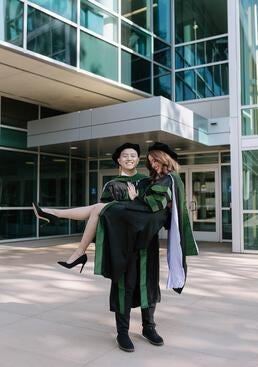
Ultimately, each was accepted to the Western University of Health Sciences College of Osteopathic Medicine of the Pacific in Pomona and decided to attend together. “We weren't anticipating going to the same medical school, so the fact that we were able to was just a very pleasant coincidence and surprise,” Sang said. “Things just worked out.”
Medical school is traditionally difficult, but the experience held particular challenges--and benefits--for the newly married pair. “We were navigating surviving in this very rigorous world together, and so it took a lot of learning how to be there for each other. Learning whether we wanted a shoulder to cry on, or if we wanted actual advice, or… learning when to put away the Anki cards and the textbooks,” Sang recalled.
“I don't think I would have gone through it without her… we really helped keep each other sane and helped each other through the hard times of medical school,” Ng added.
They overcame other challenges, too. During their second year of medical school, as they studied the cardiac system, Sang’s mother had a heart attack. While helping her recover, Sang learned from the experience ways to support her future patients. “Navigating through the healthcare system with her and having to deal with insurance and seeing the confused look on her face when doctors were describing to her what a heart attack was, a myocardial infarction, it just made me live through the eyes of a patient and what it was to be a family member of a patient,” she said. “My first experience with healthcare was through my mom, and so I forever keep that with me when I'm talking to my patients because I never want to use medical jargon that they don't understand.”
When the time came to choose specialties, their paths diverged. Ng, who enjoyed building trust with patients over time, selected family medicine. “Family medicine is where it all starts--when someone hasn't seen the doctor for many years or they don't really know where to go, they make an appointment with their primary care doctor,” he said. “I get to see their progress and congratulate them and give them kudos for doing well for themselves.”
Sang chose psychiatry, a specialty she called “love at first sight.” “I love the nuances that come with doing patient assessments, being able to read between the lines but also go beyond what a patient tells me, being able to interact with their family members and with social workers; it’s almost a holistic approach to patient care within a specialty,” she explained. “I love just how we're still taking psychiatry into the modern era, and we're trying to figure out what it means to be a psychiatrist because that definition is still constantly changing.”
Matching into residency as a couple
Next came the most nerve-wracking part. “What if we don't match together?” Sang recalled. “Couples matching definitely was made to be scarier than it actually was… but I also really believed in us, I believed in our application, and I believed in how strong we were individually.”
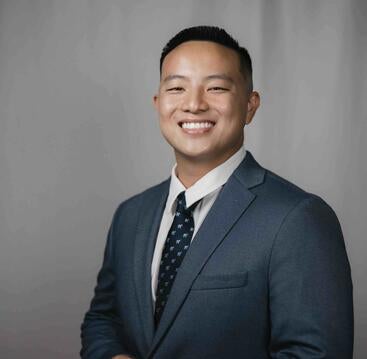
On top of the already challenging statistics for a couples match--where a couple applies for the same residency program--the two had earned a Doctor of Osteopathic Medicine (DO) degree from Western rather than the more traditional Doctor of Medicine (MD) degree. “As a DO… you're told throughout medical school to be realistic, and I felt like UC Riverside was quite a long shot for me,” Sang said. “But then on interview day, I just fell in love with how easy it was to interact with everybody… and I obviously had really great experiences being at UC Riverside as an undergrad as well, so I felt like I could take a chance on UC Riverside and thankfully they liked me back,” she added.
“The fact that our programs were willing to take a chance on us says a lot about how great they are, and how being an MD versus a DO doesn't matter as long as you yourself are a strong applicant and you're willing to engage with the community and serve the underserved,” she continued.
Now, both are second-year residents at UCR. “Coming back for residency felt like coming back home,” Ng said. As part of the first class of the new family medicine residency program, he said, “I get to be a part of something and try to help build it and hopefully leave a legacy.”
“Staying in the community and understanding the community, since he went to medical school in the area, it's an asset to the program,” added Blanca S. Campos, MD, a faculty member in the family medicine department who works with Ng. It “definitely contributes to our mission to serve this population in the Inland Empire.”
Despite their busy resident schedule, Ng and Sang are still able to make time for each other. “Our residencies are definitely great at promoting work-life balance… so it hasn't been that much of an issue for us to spend time with one another,” said Sang, explaining that their programs have helped them coordinate vacation weeks together. “I see it within my leadership, I see it in our program coordinators--they care about us as residents, and it makes us want to care more for our patients, because we have the mental health capacity and the wellness to do it.”
And for the first time in years, they’re on different paths with distinct experiences to share at the end of each day. In medical school, “It was just us being very tired and going through the same kind of tired experience. So when wanting to talk to someone about it, we had each other, but both of us had already gone through it,” Ng said. Now, “it's hard because we're always at different sites… but I think just being able to share our experiences has been wonderful,” he added.
Teamwork to benefit patients
Ng also enjoys learning about a different side of medicine from evening recaps with Sang, then using it to help his patients. “Behavioral health really does start in primary care,” he said. “Most antidepressants are started with your primary care doctor, so I think I have a different understanding because… I get to hear how certain medications work, and that way I'm able to make suggestions for my patients.”
Campos recalled one instance when Ng texted Sang for guidance on helping a patient pay for psychiatric medication. “It’s very helpful to have someone that… you're just a text away and they'll be able to answer if they're available and have that comfort,” she said.
For her part, Sang said she tries to emulate Ng’s easy demeanor in the clinic. “I'm constantly amazed by just how good of a doctor he is--I feel like his patients love him so much, and to be honest, I think what I’ve learned from him is… how to be a good doctor, how to be personable, how to get along so well with your patients and your attendings,” she said.
Even as second-year residents, both are already making a difference in their patients’ lives. Ng recently treated a patient living with poorly managed diabetes after not seeing a doctor in years. “Through many visits together we were able to help them get to a very healthy spot, and they're very familiar with their health now and signs that they need to look out for,” Ng said. “They're trying to give me credit for it, but I was like, ‘No, you guys are the ones doing the work,’ so that was really cool.”
For Sang, one patient’s repeated psychiatric urgent care visits for mild concerns motivated her to make time for a casual conversation to explore further. “I was able to glean that there was something concerning going on in his home life that was likely the root cause of his frequent visits and it required more intervention than what we'd been providing,” she said. The conversation led her to coordinate with social services to arrange the help the patient needed. “Had I just continued to address his superficial concerns, we never would have reached the main source of his needs,” she said. “There's something to be said about being able to connect with a human being and truly looking them in the eye and saying, ‘I'm here for you, and it's going to get better.’”
Both Sang and Ng are focused on serving their patients while remaining committed to supporting each other. “One thing that really helped our relationship was learning when to stop being doctors, stop being medical students, stop being residents, and just be with each other,” Sang said. “When we get home… we both have a lot of fun anecdotes about experiences and things that we learn, and of course we want to share that with each other, but there's a certain point in the day where we're just like, ‘Okay, we're just going to put this down now,’” she continued. “Medicine's always going to be there. It's always going to take whatever we're going to give it, so being able to draw that line… really strengthens our relationship.”