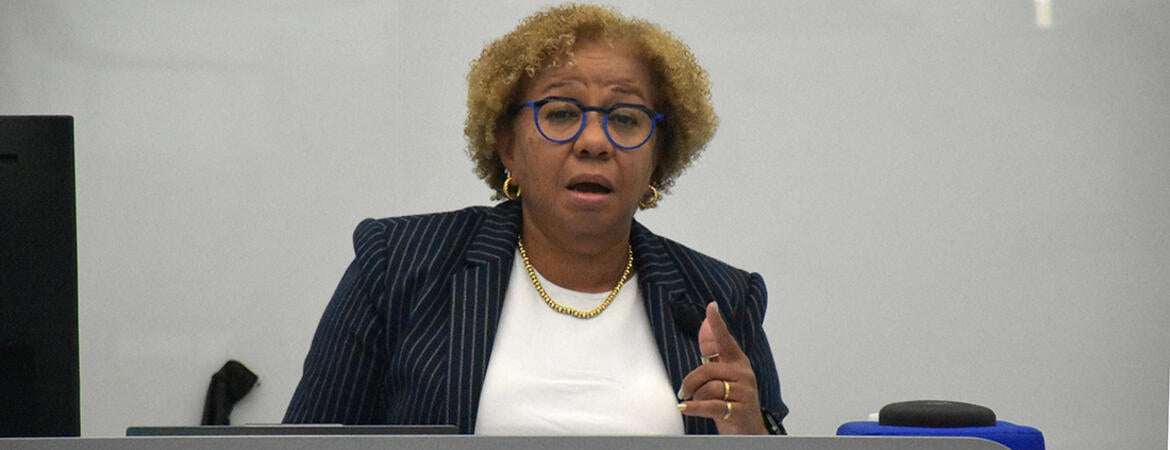
In a Grand Rounds presentation at the UC Riverside School of Medicine titled “Five Years Later: Progress, Partnerships, and Possibilities in Child Mental Health,” psychiatrist Tami Benton, MD, said that American youth are showing the first drop in emotional distress in more than a decade, but that there is still more work to be done in ensuring young people have access to proper mental health care.
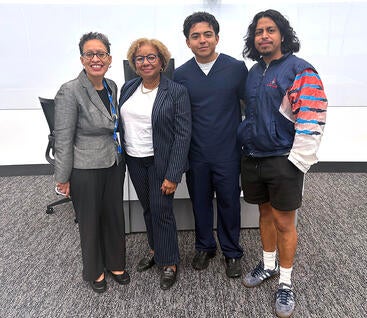
Benton is the Fredrick H. Allen Professor of Psychiatry at the Perelman School of Medicine at the University of Pennsylvania and chair of psychiatry and behavioral sciences at The Children's Hospital of Philadelphia and immediate past president of the American Academy of Child and Adolescent Psychiatry.
Benton shared data from the Centers for Disease Control and Prevention that showed measurable improvements in youth mental health indicators, including the proportion of high school students reporting persistent sadness or hopelessness falling from 42% to 33% in 2025. Suicidal ideation dropped to 14%, compared with more than 20% before 2024, and reported suicide attempts fell to 6%.
Benton attributed the progress to targeted investments in community and school-based programs launched after the October 2021 emergency declaration by pediatric and psychiatric groups. These initiatives included the formation of Youth Mental Health Corps, $100 million in federal grants for school clinicians, the 988 Suicide & Crisis Lifeline, and virtual wellness platforms.
However, the system remains under severe stress. Between 2011 and 2020, emergency department visits for youth mental health crises increased 56%, with suicide-related emergency visits increasing fivefold. Further, fewer than 20% of children who went to emergency rooms for mental health crises received an evaluation from a mental health professional during their visit, Benton said.
Schools also face ongoing resource shortages. Half of U.S. public schools report severe staffing constraints, with a national student-to-counselor ratio of 376 to 1, above the recommended ratio of 250 to 1. Recent federal policy shifts have also added uncertainty to workforce funding. State governments are funding local initiatives in response to these shifts.
At the UC Riverside School of Medicine, there are several instances where these priorities are being translated into practice. The California Child and Adolescent Mental Health Access Portal (Cal-MAP) provides primary care clinicians with free, real-time behavioral health consultations, care coordination, and educational resources to support children and young adults.
Through the Children and Youth Behavioral Health Initiative, the UCR Department of Psychiatry and Neuroscience launched the School-Linked Trauma-Informed Program (STAR) in 2025, led by Kimberley Lakes, PhD. The program created a community-based hub that integrates trauma-informed therapy, outreach, research, and clinical training. A partnership with the Orange County-based The Craig School brings neuropsychological assessments, diagnostic services, and individual and group therapy directly into educational settings at no cost to families.

Investments in telepsychiatry and other behavioral health services also compliment efforts to improve access to behavioral health care.
The department is also advancing workforce education and training through federally supported initiatives. Department Chair and Professor Lisa Fortuna, MD, MPH, MDiv, is principal investigator of a $900,000 grant from the Substance Abuse and Mental Health Services Administration (SAMHSA) and leads PATH for Substance Use Care, an initiative to develop and implement an integrated, multi-year medical school curriculum focused on substance use disorder prevention, identification and treatment. The program will strengthen physicians’ ability to provide evidence-based, culturally responsive care as they treat substance use and healthcare disparities in Inland Southern California.