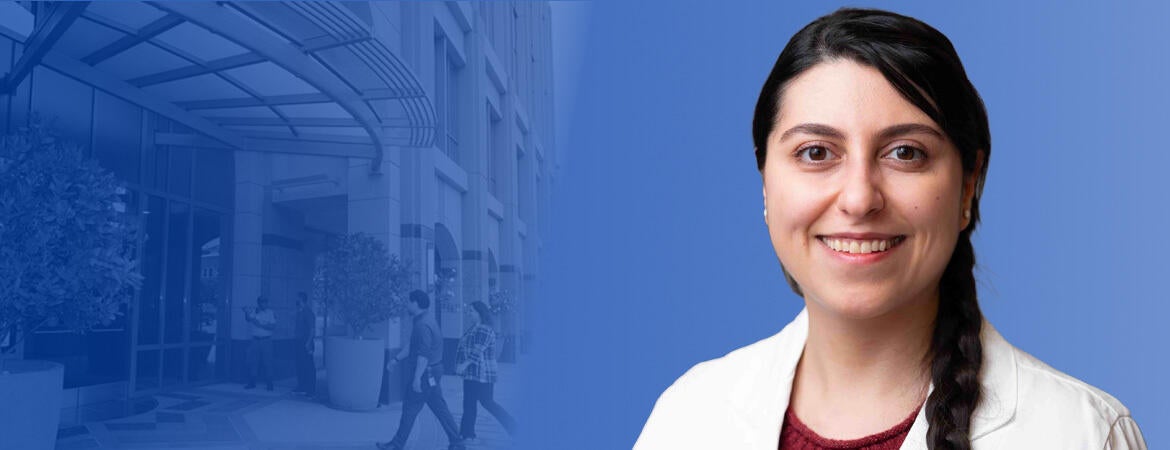
As a medical student, Mahsa Khayat-Khoei, MD, found neurology complex and interesting, but also somewhat intimidating. “You get to study neurons and different diseases that affect different areas of the brain, but there was no treatment, which was disappointing,” recalled Khayat-Khoei, now a fellowship-trained neuroimmunologist at UCR Health.
Then she discovered the field of multiple sclerosis (MS). Witnessing treatments helping patients, Khayat-Khoei felt excited by the many opportunities within neurology to shape the field. Compared to fields like cardiology that have inspired numerous studies over the decades, “neurology is behind, so there is still a lot of unknown in neurology and even in multiple sclerosis,” she said. “That made me interested in neurology and contributing to research that can have meaningful effects for the patients.”
Diversity in research at UCR Health
After completing her fellowship in multiple sclerosis and neuroimmunology at Harvard Medical School, Khayat-Khoei joined UCR Health in October for the opportunity to help underserved patients while conducting groundbreaking research. “Here you see more different cultures, it's a completely different environment, and you get chances to contribute significantly to the community and feel more content with what you're doing because you’re helping patients who need to be seen,” she said.
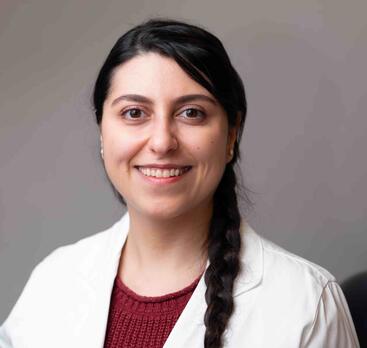
Khayat-Khoei’s research, which she began at Harvard and will continue at UCR through an American Academy of Neurology Career Development Award, examines the effects of innate immunity on progressive MS. Even with current MS treatments, she explained, underlying inflammation can cause patients’ condition to slowly worsen for decades, leading to the progressive form of the disease along with significant disabilities. By studying the innate immune cells that may contribute to inflammation, Khayat-Khoei aims to identify changes in the cells over the course of the disease. “If we confirm that there is a pattern, then we can go after a biomarker, a blood test that can then tell us who is moving toward more progressive MS,” she said. “It can have the potential to open a lot of new areas for research and for treatment.”
The diversity of the Inland Empire community will also allow Khayat-Khoei to apply her research to broader groups, in contrast to much of MS research that has primarily been conducted among Caucasian patients. “Once I have the opportunity to study these different patient populations, I may be able to identify a more individualized pattern that we might have missed or overlooked when focusing our research only on one patient population,” she said, giving examples of looking at vitamin D levels and specific symptoms among patients from varied backgrounds. “If they are the target of this study, then the results will be more applicable to them,” Khayat-Khoei added.
Monica J. Carson, PhD, chair of the Department of Biomedical Sciences and the S. Sue Johnson Presidential Endowed Chair in Glial-Neuronal Interactions, expressed excitement about Khayat-Khoei’s work. “We don't have a lot of neurologists in our region, and we definitely don't have a lot of neurologists who have expertise in multiple sclerosis, and that are also combining that with clinical research in that area, and that will be looking at our populations, which are grossly understudied,” Carson said. “She's bringing in expertise, not only in healthcare delivery but also in examining how health outcomes develop in this region.”
Helping current and future patients through research
While Khayat-Khoei is still in the process of obtaining Institutional Review Board approval required for human studies so she can continue her research in UCR, she said that several of her patients have already expressed interest in participating in her research. “I think the patients here have a strong sense of community,” she said. “So when you tell them, ‘Even though you may feel like you're getting worse and we don’t yet have a treatment for progressive MS, if you participate in this research, we may be able to find better treatment targets for you or for others like you,’ [then] they want to help.”
For one MS patient who previously lived in Texas, a doctor’s recommendation led her to move to Riverside for care. But when her physician at UC Irvine passed away, the patient went without care for two years before coming to UCR Health. “She told me, ‘I feel hopeless with this disease, there's no treatment,’ so I was able to talk about treatment options and how physical therapy can help her,” Khayat-Khoei said. “I was able to give her more information and make her feel more in control of her disease moving forward, and then she was one of the patients who said she wanted to contribute to the research.”
Besides the potential to help future patients through new MS treatments, Khayat-Khoei said her research gives her deeper insights into effectively treating her current patients without prescribing unnecessary medications or steroids. “It makes you more aware of the whole picture, and it gives me a better idea of what treatment is best, and to be more careful in my treatment choices for patients,” she said.
Educating patients and the community
Khayat-Khoei aims to eventually share her research with the community, but in the meantime, she’s dedicated to educating community members about general brain health. A recent community presentation she led on November 14 shared risk factors and warning signs for stroke as well as underlying reasons for memory issues. This is important, she said, because many people don’t recognize symptoms that require urgent medical care.
Khayat-Khoei gave an example of one stroke patient whose family suggested she rest after she experienced sudden weakness and numbness on one side of her body. They only took the patient to the emergency room after she woke up a few hours later and was unable to walk. “Especially with a stroke, if you do not take the warning signs seriously, you might end up with long-term disability,” Khayat-Khoei said. “But if you seek help early, ideally in the first four hours after symptom onset, you can have a full recovery.”
In addition, she discussed different causes of memory issues and explained that understanding the distinction between memory loss related to Alzheimer’s disease and memory problems associated with depression is important to help guide people in seeking appropriate care. She added that recognizing the difference can also help older adults decide when to grant medical power of attorney to their children. “It's really important to inform the community, and I enjoy doing that, especially here because I feel people truly need it and can benefit from more health and neurological educational opportunities,” Khayat-Khoei said.
She hopes her work will make a difference both for her patients and for science as a whole. “We live in a world built on many discoveries, and I want to contribute, perhaps by identifying a biomarker that others can build upon,” Khayat-Khoei said. “I want to contribute to the scientific community and the work that researchers around the world are doing.”